After the 2022 journey from Nador to Azilal, Here we are again with another trip and new adventures. This year, I wanted something different, something a little unconventional. So my choice what to go through the Morocco-Algeria border from Oujda in the North to Draa Valley in the south.

The trip before trip
This trip turned out to be one of the best experiences I’ve ever had. I met incredible people, discovered breathtaking places, and lived through moments that truly moved me. Most importantly, I learned a lot, both about Morocco and about myself.
Before diving into the lessons I learnt from the trip, here are some facts about it:
- Traveled over 3500 KM in 20 days
- Walked 300+ KM
- Visited 11+ major cities across 3 regions
- Explored 10+ small towns and villages
- Accommodation:
- 1 night on the road (train to Oujda)
- 15 nights in hotels and guesthouses
- 3 nights camping (including one in the desert)
- 1 night hosted by a family

Glimpses of Oujda
Now that the numbers are out of the way, here’s what I learned from the journey 😁
Everything from the previous trip still stands
If you haven’t read about my previous trip, what are you doing here? Go check it out first 😝 most of what I said there still holds true!
Morocco is huge
The goal was to reach Guelmim through Akka, but I barely made it to Tata by the final week. I didn’t have enough time to continue south, so I looped back through Taroudant to Marrakech instead.
Morocco is massive! Even after years of exploring, I still have hundreds of destinations left on my list.
Morocco is rich
Even though the eastern region shares the same dry climate and landscape, every place feels different. Hot Oujda, cold and windy Debdou, the rocky plains stretching to Bouarfa and then the lush green oases from Figuig through Tafilalet to the Draa Valley.
Each town has its own story, traditions, and soul. I was fascinated by the Marinid legacy in the east, the Alaouite roots in Tafilalet, and the prehistoric depth of Tata and the Draa Valley.
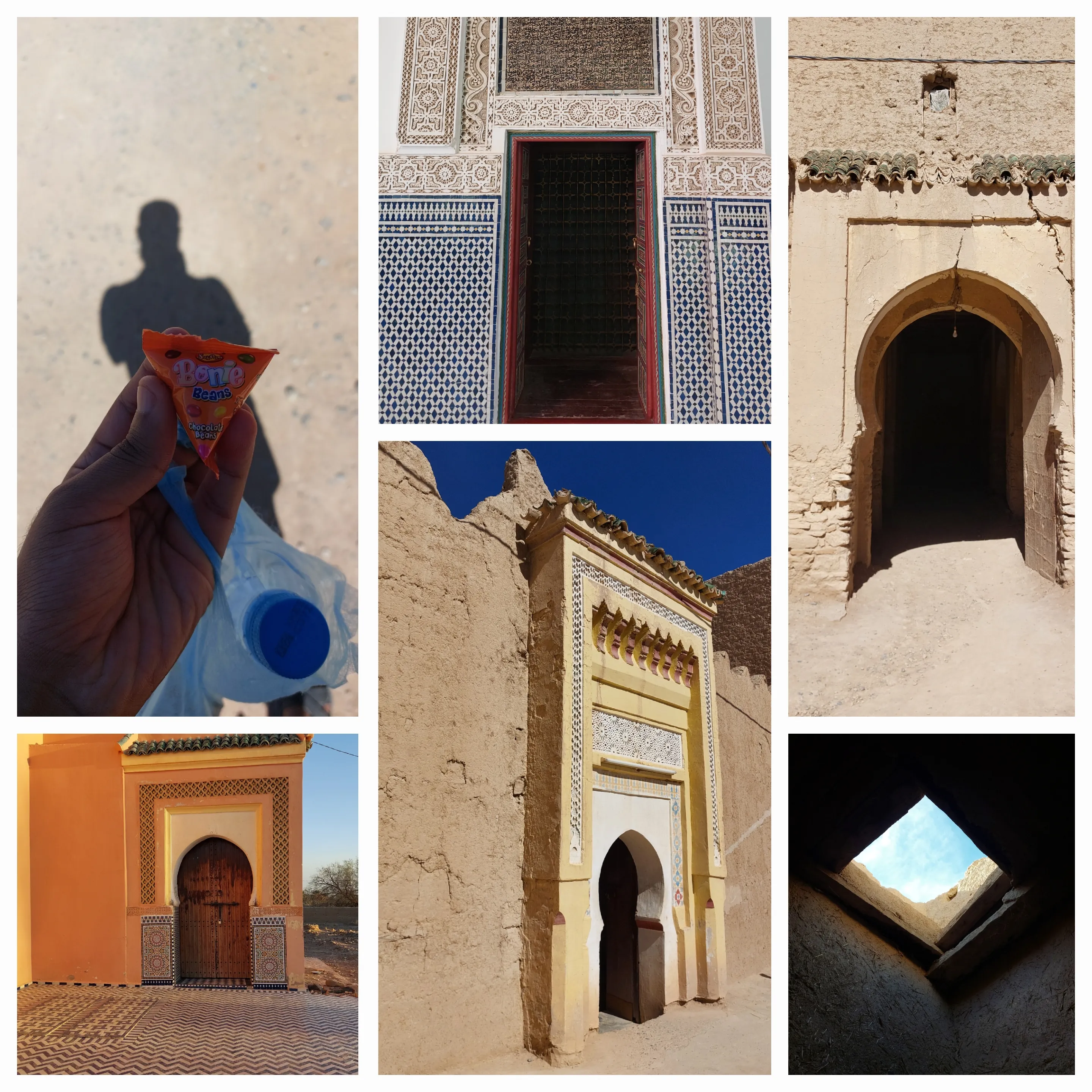
The peace of Tafilalet
I’m not shy .. I’m just lazy
The more I travel, the more I realize this. When I’m on the road, I become incredibly social. I talk to strangers, ask questions, help people, and accept help too. I really should bring that version of me into everyday life.
Good people » bad ones
Once again, I met countless kind people: those who showed me the way, offered food, or invited me into their homes for a meal or even a night’s stay.
Solitude is rare
If you’re looking for solitude, head south-east. There’s nothing like walking alone under the stars in Figuig or Rissani, or losing yourself in the quiet desert around Merzouga or Mhamid.
By the end of the trip, I had made peace with solitude. I wasn’t bored being alone anymore I was fulfilled by it.
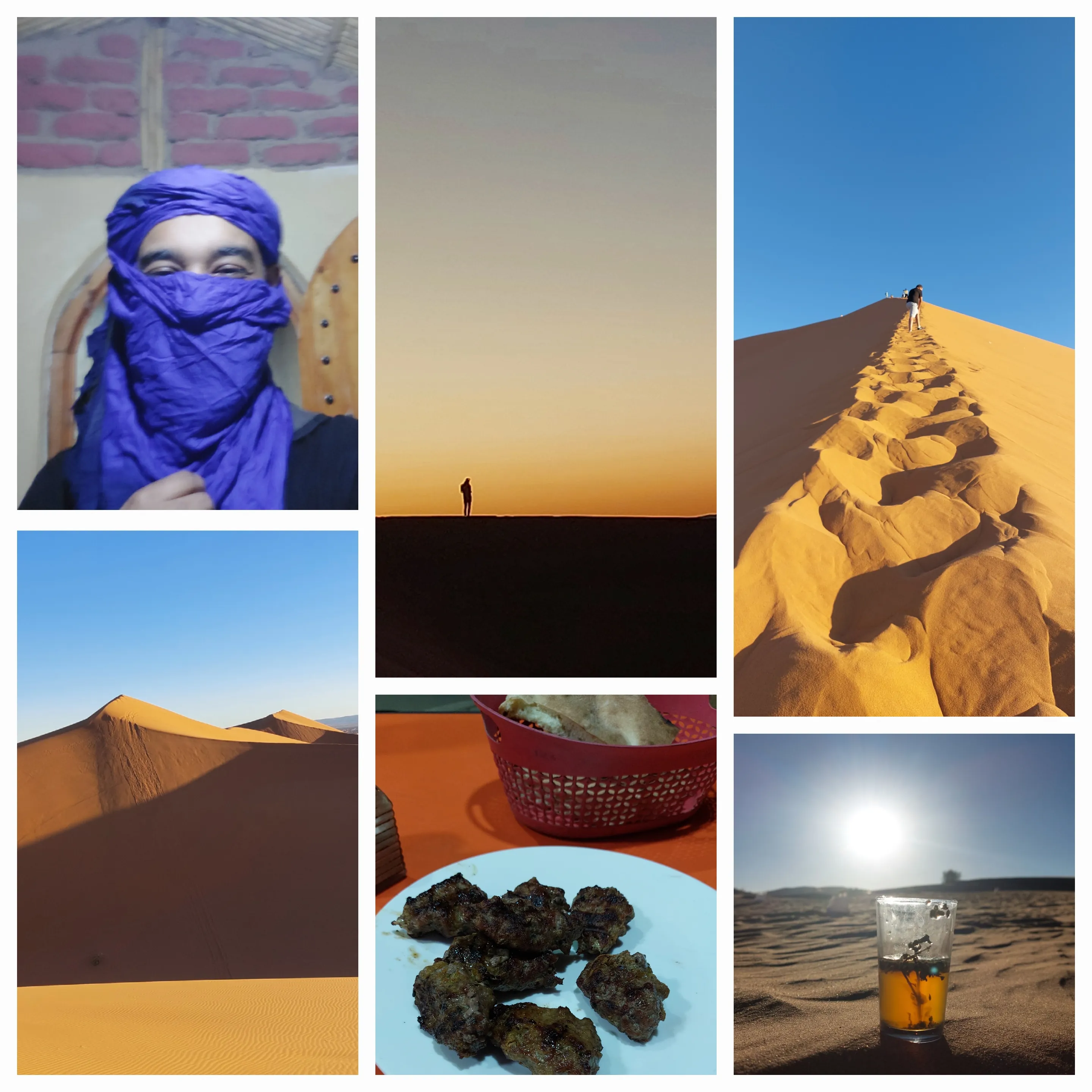
Alone in the Sahara
L’Oriental region is underrated
Before starting the trip, I didn’t expect much from L’Oriental. I was curious, but I thought I’d spend only a few days there. I was wrong! It’s a treasure.
Oujda’s long and complex history in Moroccan and North African politics fascinated me. Then there was Taourirt’s Kasbah, mysterious and beautiful.
Further south lies Debdou, once the capital of the Emirate of Debdou, which ruled from Tlemcen to the borders of Fez. It still has a Marinid/Wattassid Kasbah and intriguing old shrines. Debdou was also one of Morocco’s most important Jewish centers, full of synagogues, schools, and homes that tell their forgotten stories.
Then there’s the legendary Sahara–Mediterranean Railway, built to link Niger to the Mediterranean, an ambitious project that never reached the Sahel but still stands from Oujda to Béchar in Algeria. I explored several of its old stations: Oujda, Ain Beni Methar, Tindrara, and Bouarfa and met the nomads who still live around them.
And finally, Figuig! One of Morocco’s oldest and most peaceful cities. Its seven Ksours, palm oases, and serene people make it a place like no other. I’ll never forget its thousand-year-old stone minaret and its underground hammams, the Bahbouhas.
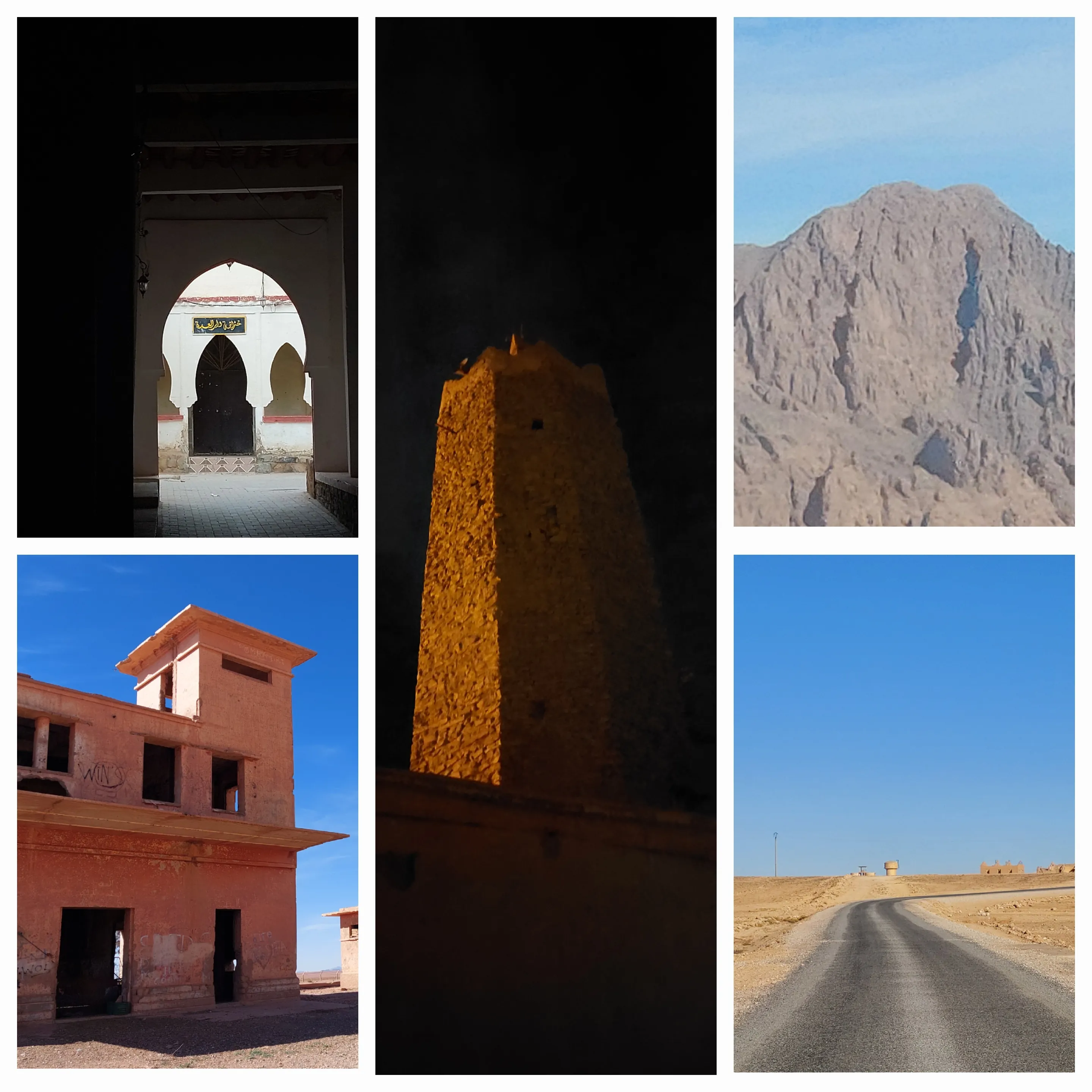
Figuig and the surroundings
Traveling longitude is harder but more interesting
When planning your travel, you can either choose traveling trough longitude lines meaning from north to south or the opposite, or the through latitude lines meaning from east to west, or a combination of both.
Traveling through longitude is most of times longer and harder. This is because the cities are often clustered on latitude, which mean traveling south meant longer distances for me. Also the transportation was not very available. Also the tendency for the weather to change between longitude lines is higher, meaning you have to pack more clothes and gear for different weathers.
Despite The long distance and different weather, traveling on longitude is a bliss for the same reasons it is hard: Longer distances, different weathers and different nature and landscapes and of course different people and cultures.
From Oujda to Fuguig and Bouarfa, people are very different and have different traditions and customs and sometimes have different languages. Going Back to Errachidia and Tafilalet in General, the people are completely different, the nature is also different. Same happened when I traveled to Zagora, Foum Zguid and Tata, The people are completely different from Tafilalt and l’oriental but they share common traits between themselves.
Same applies for the food, the architecture, the fauna and flora, and many other things.
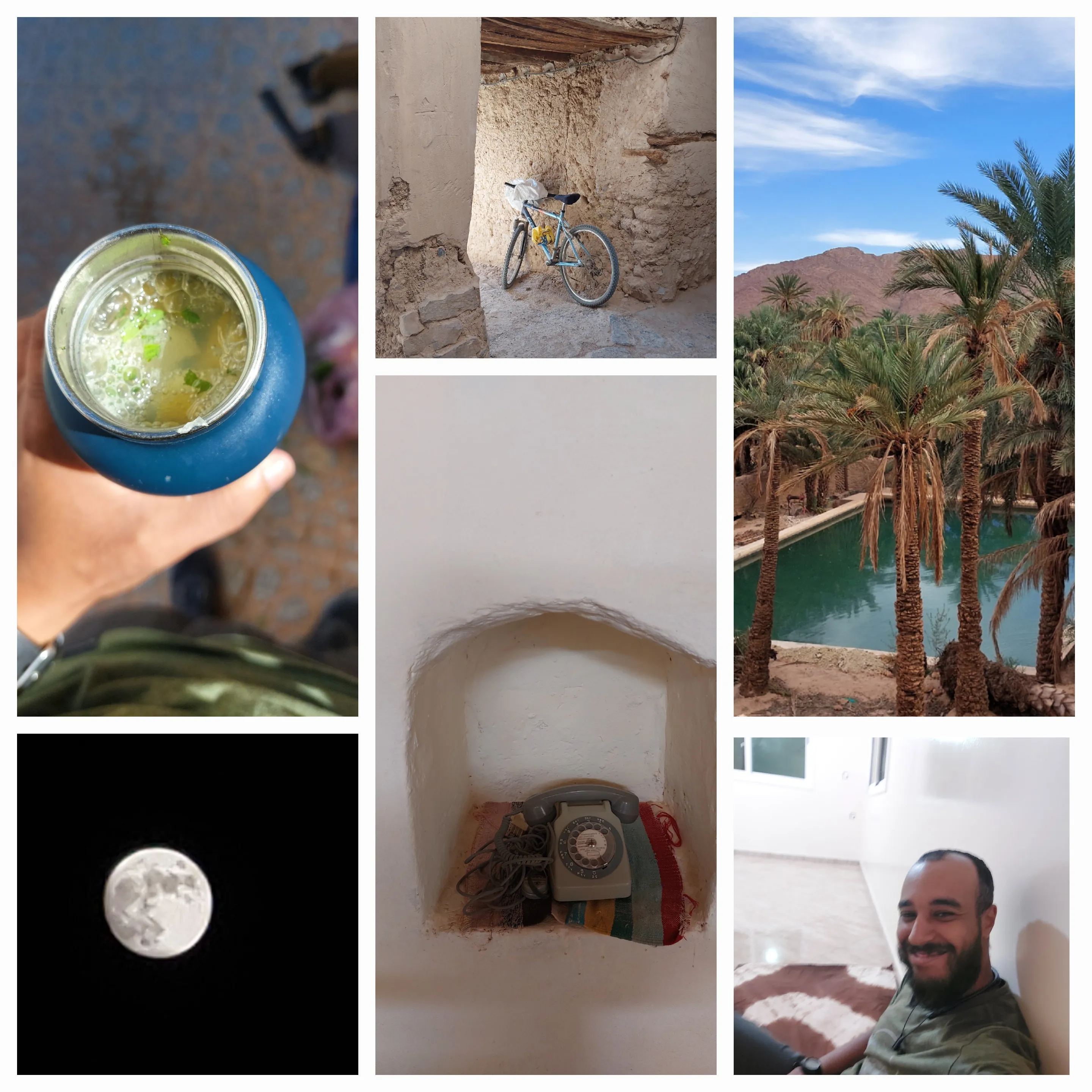
Little Joys from Figuig
There’s no limit to human creativity
One of the places that struck me most was Fezna, near Erfoud. I met Marouane, a local guide, and together we explored the desert works of Hans, a German architect who built surreal monuments in the middle of nowhere:
- Stairway to Heaven: 52 steps rising into the sky
- Orion City: seven towers aligned with the Orion constellation
- The Spiral: a snail-like well shaped after the Fibonacci sequence
Hundreds of years earlier, locals had already built their own engineering masterpiece, the Khettara irrigation system. These underground tunnels, stretching for kilometers, channeled mountain water to the oases with astonishing precision.
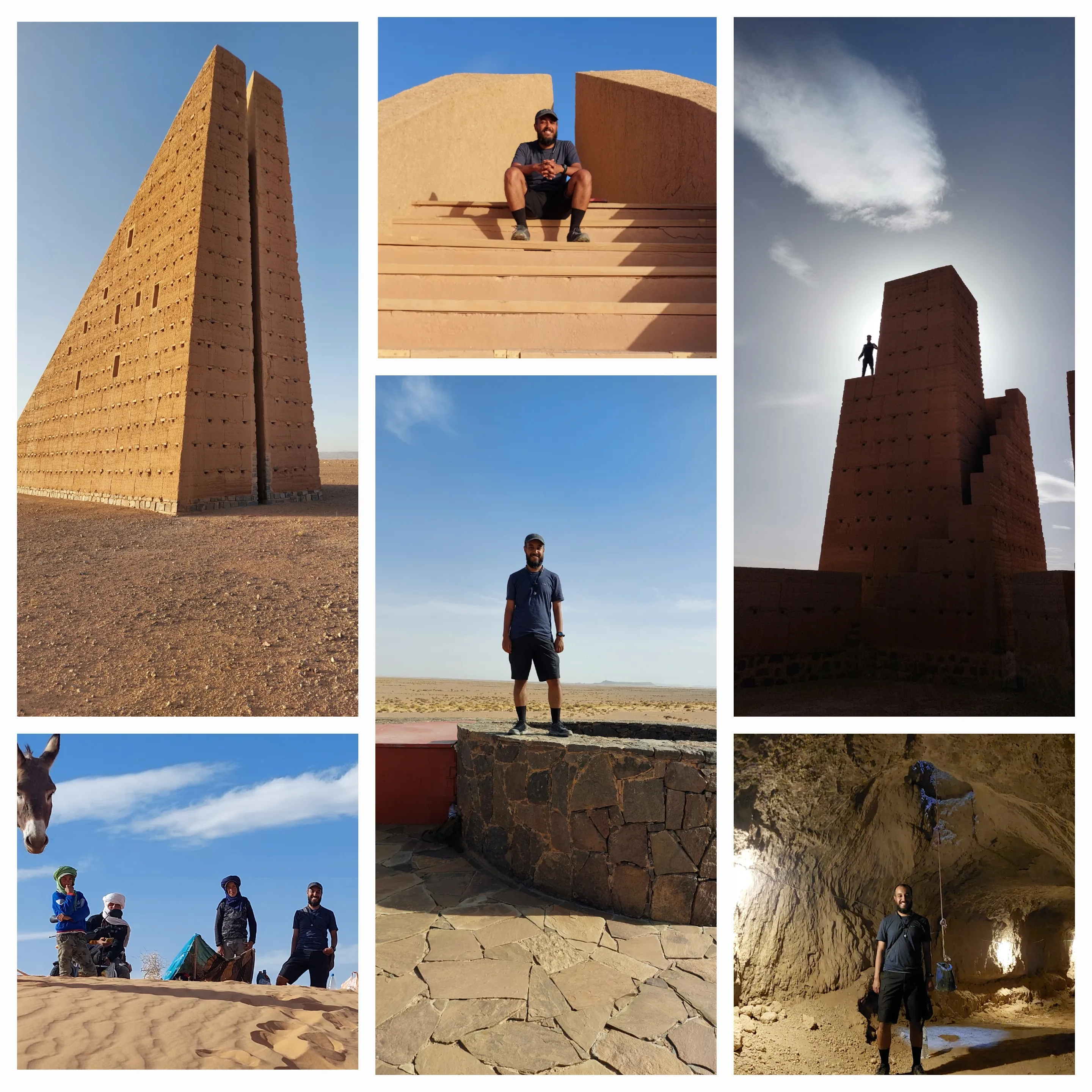
Wonders of Jorf
Morocco is Amazigh first, again!
I thought the east and the Sahara were mostly Arab regions, but I was wrong. Once outside the big cities, nearly everyone I met was Amazigh. From Bouarfa’s mountains to Figuig’s oases. Even in Tafilalet, many Ksours are entirely Amazigh. And once you reach the High and Anti-Atlas, Tamazight becomes the dominant culture and language once again.
Moroccan hospitality is unmatched, especially in Tafilalet
One night, on a bus from Bouarfa to Errachidia, the man sitting next to me asked where I’d be staying.
- “I don’t know,” I said.
- “You’ll stay at my friend’s place,” he replied.
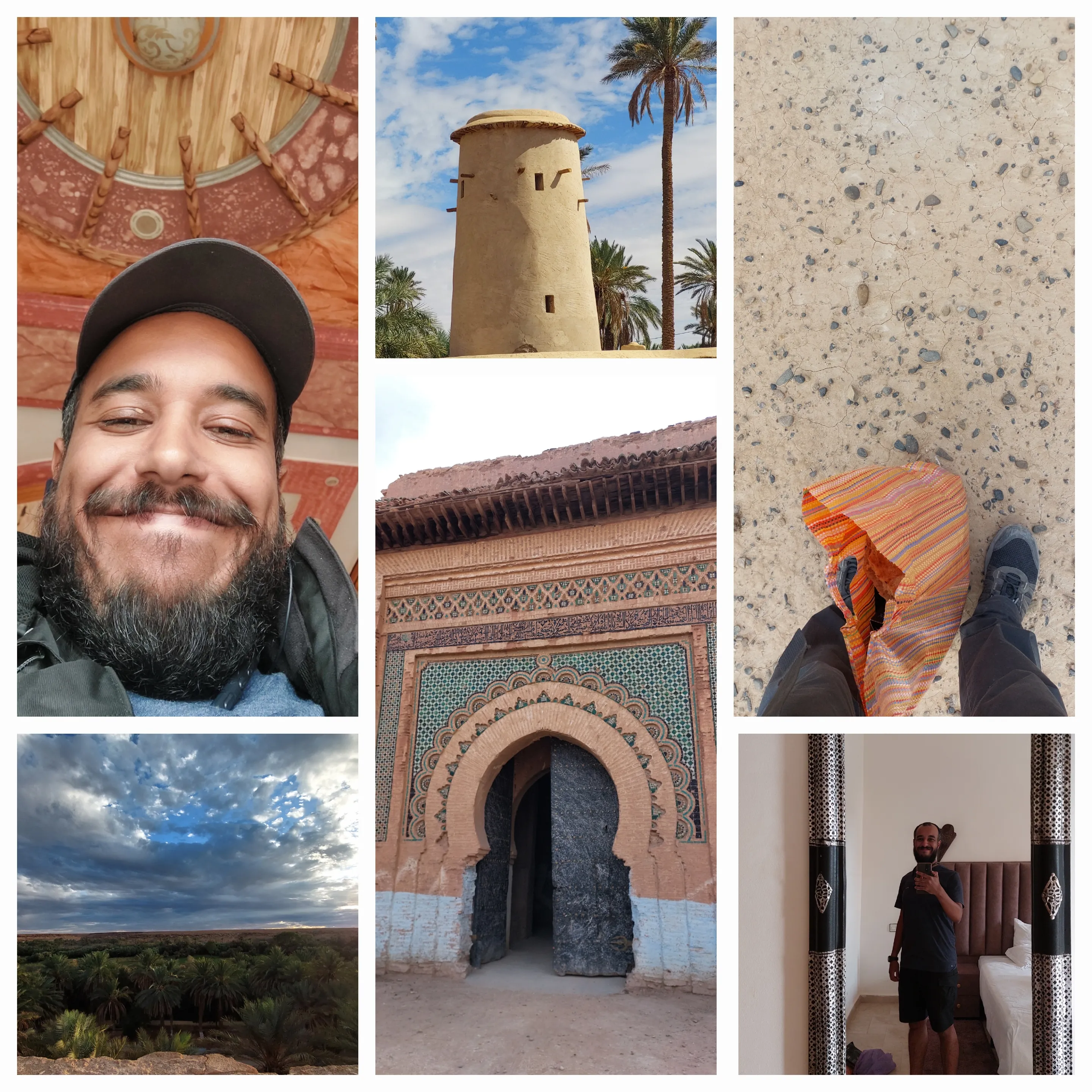
Lost in the Oasis
That night, I slept at Omar’s family home. They didn’t even ask who I was until the next morning.
The hospitality I experienced throughout the trip, especially in Tafilalet, was beyond words. People offered tea, bread, and dates, and invited me to sleep under their roofs without hesitation.
This is what I love most about Morocco (and about humanity in general).
Government agencies are underrated
Finding reliable local information is always hard when traveling. But I discovered a great trick: visit youth centers, cultural centers, or government tourism offices.
You’d be surprised how helpful they are and even when they’re not, you’ll still end up having a good chat with a local.
Morocco is a football nation
Wherever you go, football is life. I’ve seen kids playing in remote villages, watched the Champions League in remote Douars’ cafés with a few dozen locals, and even followed a CAF Super Cup match on my phone in a mountain town with no electricity.
Watching football in Debdou, Imilchil, or Alnif is an experience of its own.
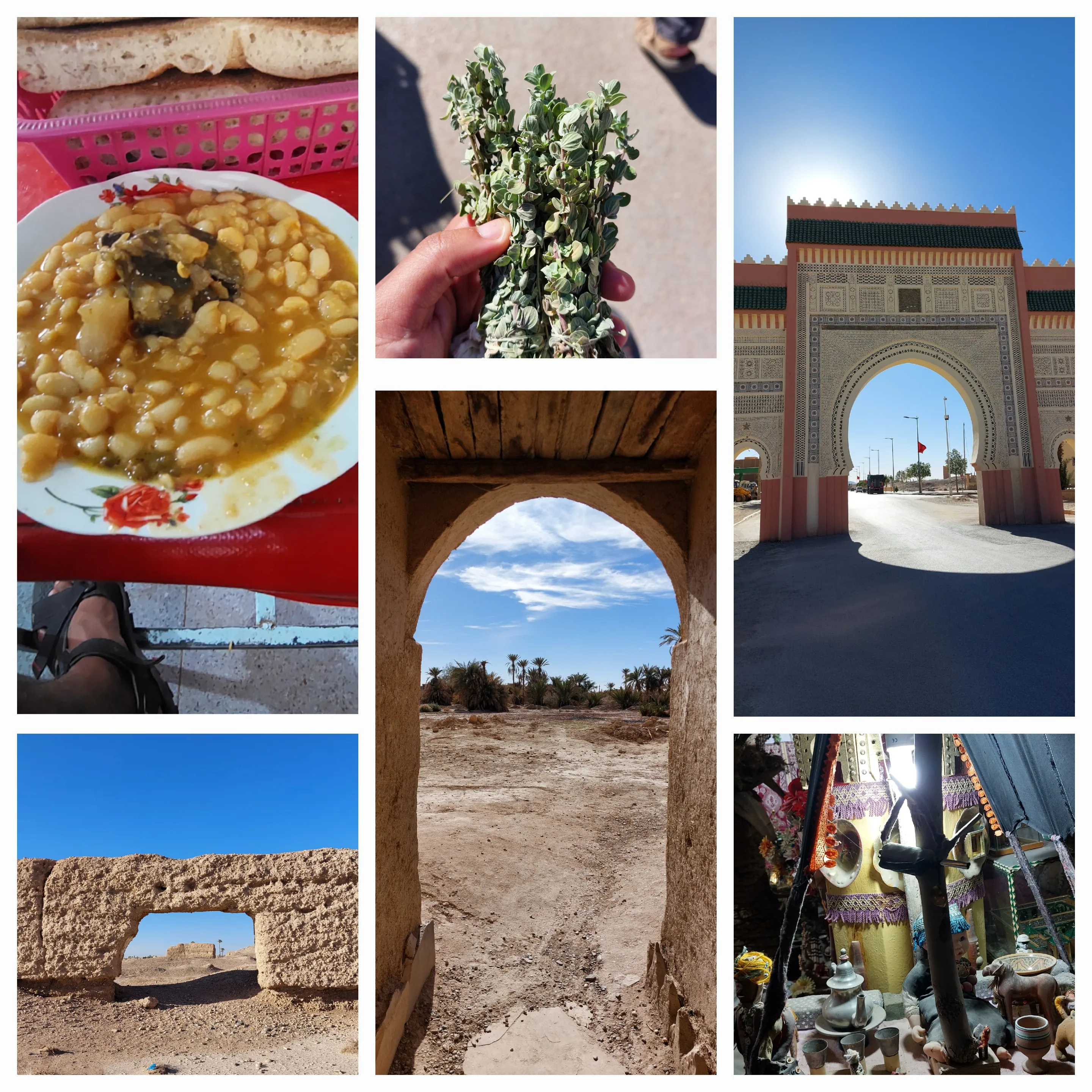
The Goodies of Sijelmasa
I even started carrying footballs to gift to kids, guaranteed smiles every time.
Border issues are holding us back
For two weeks, I traveled along the Moroccan–Algerian border and was constantly stopped by local authorities. It got tiring, but the beauty of the region made it worth it.
These border tensions have been hurting the region’s tourism potential. L’Oriental is one of Morocco’s most stunning and overlooked areas. If the borders ever reopen, it will come alive again, as it once was.
Give, give, give… and then receive
This is a life rule now. Give without expecting anything. The good you send out always finds its way back.
Another rule I learned about Giving, “When you receive always give back or pay it forward”: During the trip I bought groceries for a elderly at the Souk, I ended up with a free night’s stay. Then I gifted a balloon to a kid, and Gendarme gave me yogurt in the middle of the nowhere. Then I woman gave me water in the middle of the Ziz Oasis and I bought a headset for a Kid working remotely from Zagora and a day later I got a discount from a meal because the waiter knew it was my first time in the city.
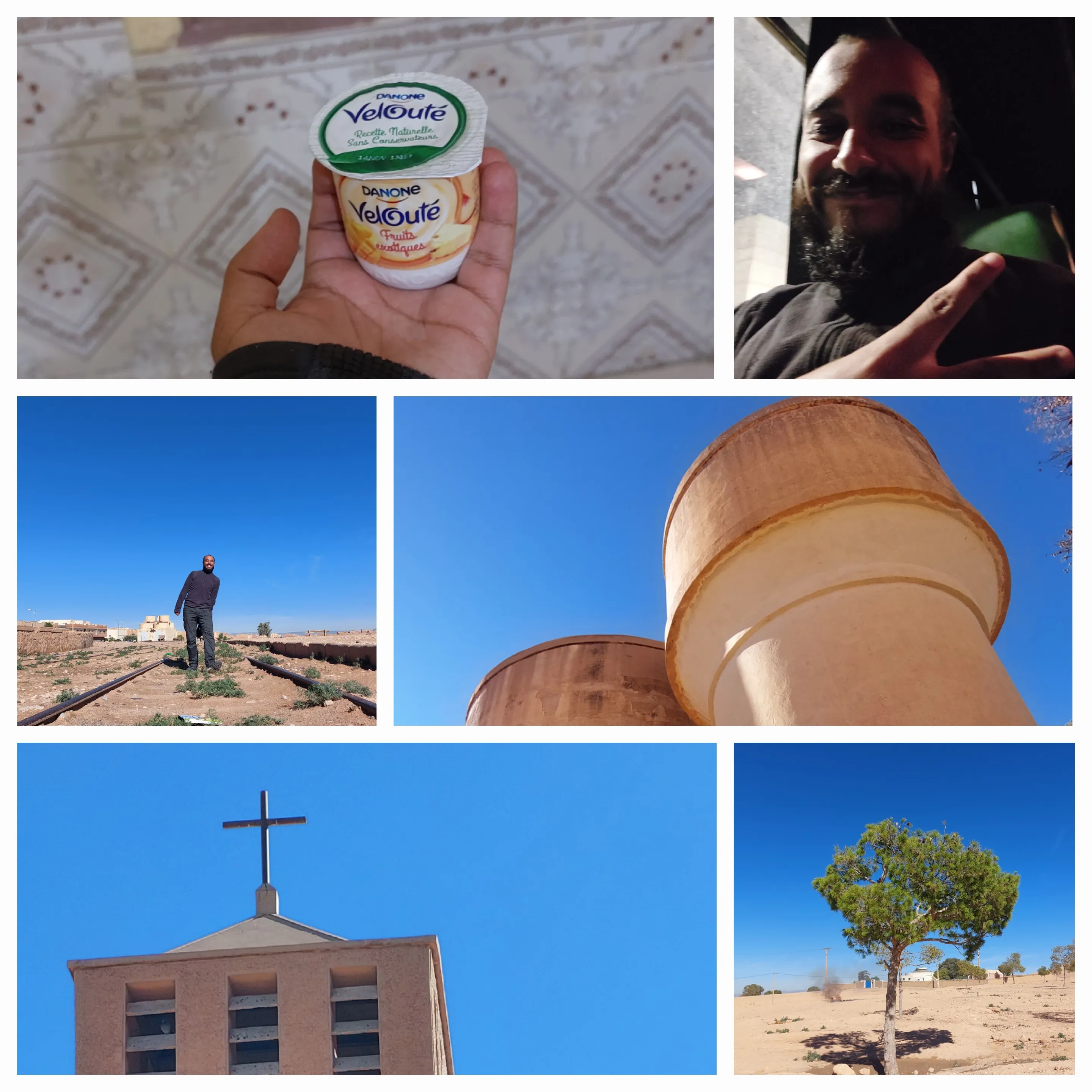
Happy man in Berguant
Life is like a garden, you grow it with giving.
Travel like a child
Traveling with curiosity changes everything. I’ve learned to say yes to new experiences, ask endless questions, and find joy in the simplest things.
When I travel, I default to trust. And that trust brings out the best in people.
Travelling like a kid is the best piece of advice I can give to travellers.
Morocco is safe — especially if you grew up in Salé
Morocco is incredibly safe, particularly outside big cities. I’ve slept outdoors, walked in the desert at midnight, and wandered through towns at dawn. Never a single bad experience Al Hamdulillah.
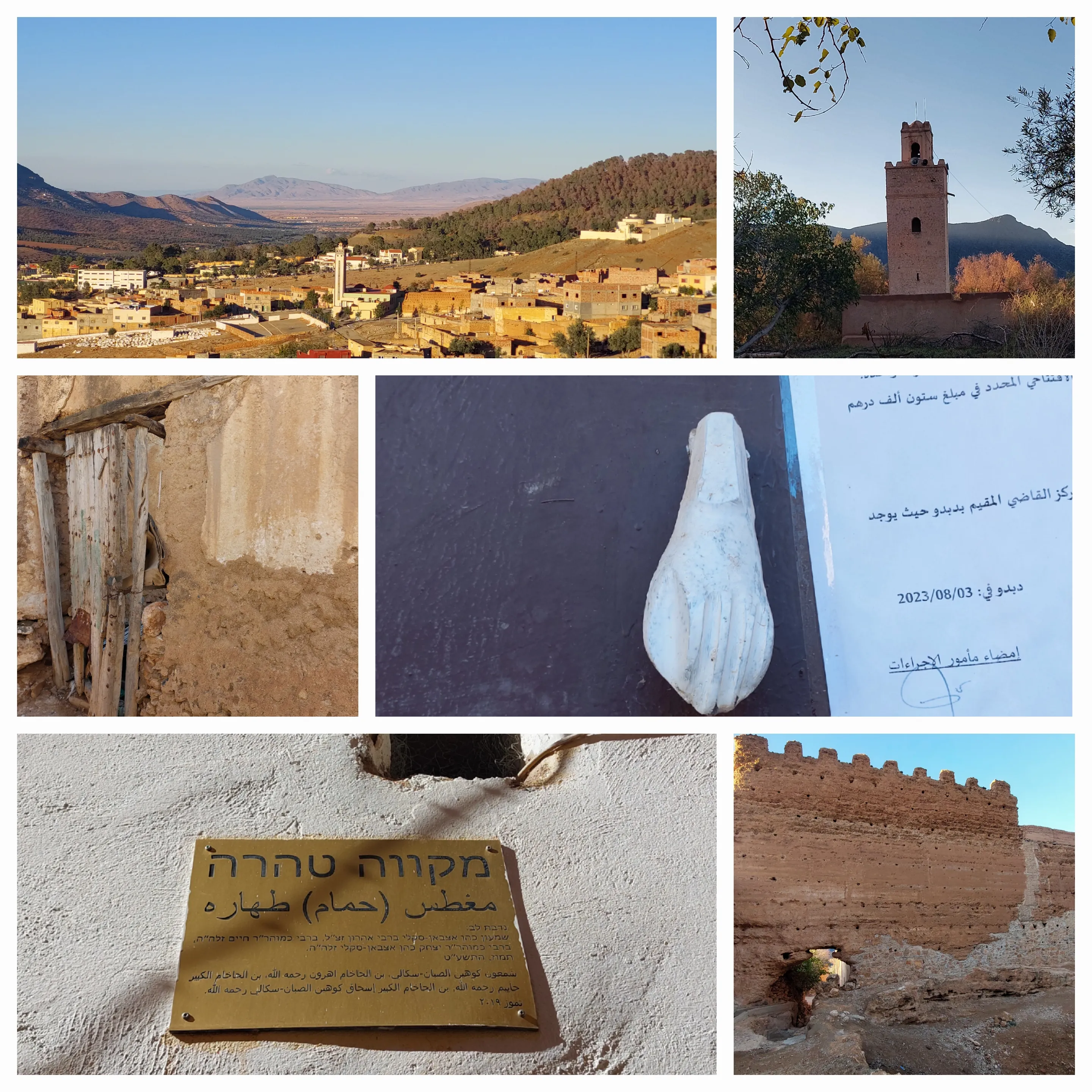
The beautiful Debdou
Maybe that thanks to growing up in a dangerous neighborhood in Salé. It sharpened my sense of awareness 😝.
Travel made me a better life enjoyer
When I first started traveling, I was always chasing grand destinations: waterfalls, mountains, dramatic views.
Now, I find equal joy in a quiet coffee in a small town or a random chat with an old man in Ain Beni Methar.
These small moments: missing a bus for a good conversation, watching a football match in Taourirt taught me that life’s beauty often hides in simplicity.
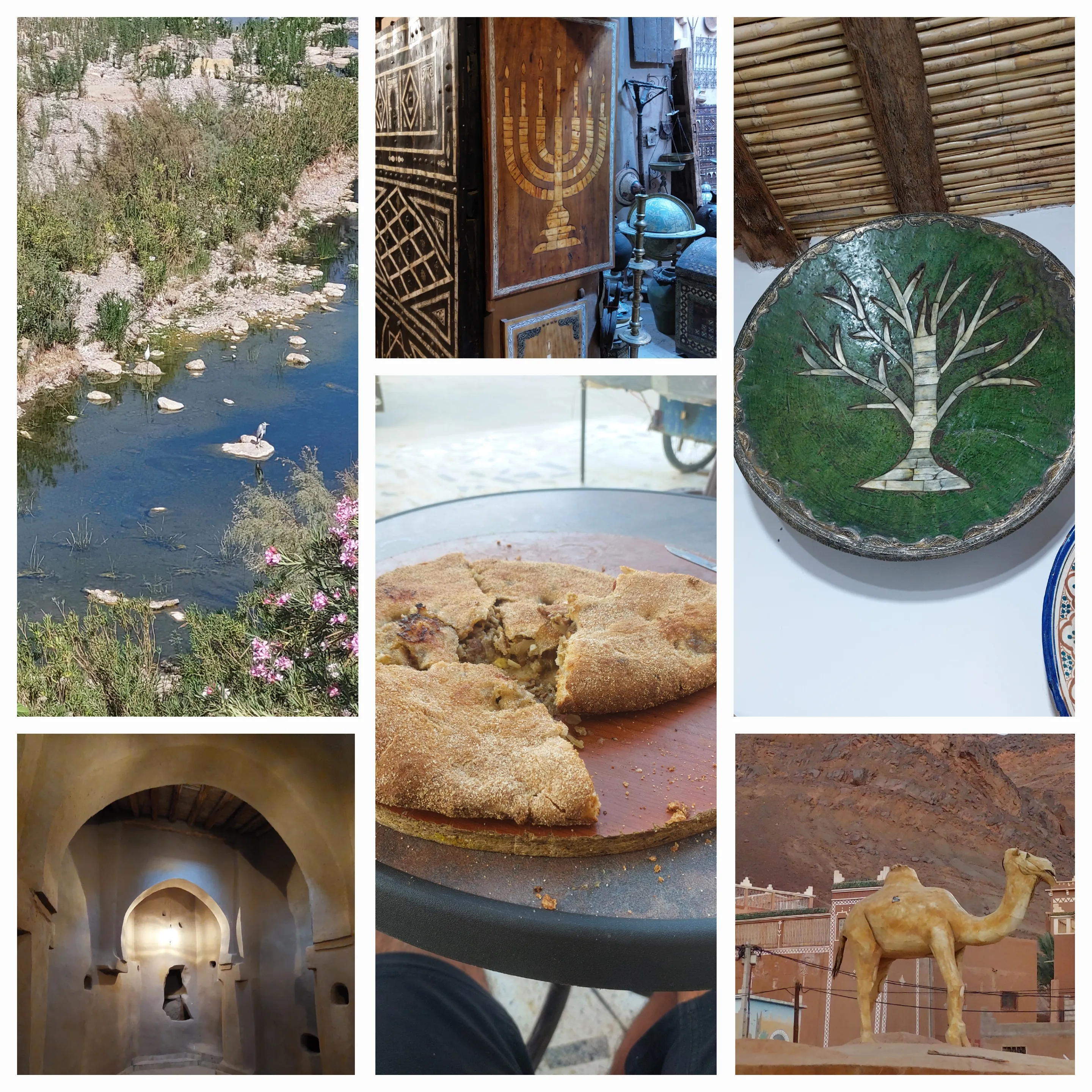
On the sides of Draa Valley
Nowadays, my happiest moments can be as simple as having a cup of tea and a good book at my neighborhood café.
It really doesn’t take much to enjoy life.
I was short-sighted
Once again, I was short-sighted! We humans can easily get obsessed with achieving great things, but that often traps us in an endless loop of dissatisfaction and frustration, always chasing what we don’t have.
Life is simpler than that. Life is about the present, the future is just a myth we invented and started worshiping and considering sacred.
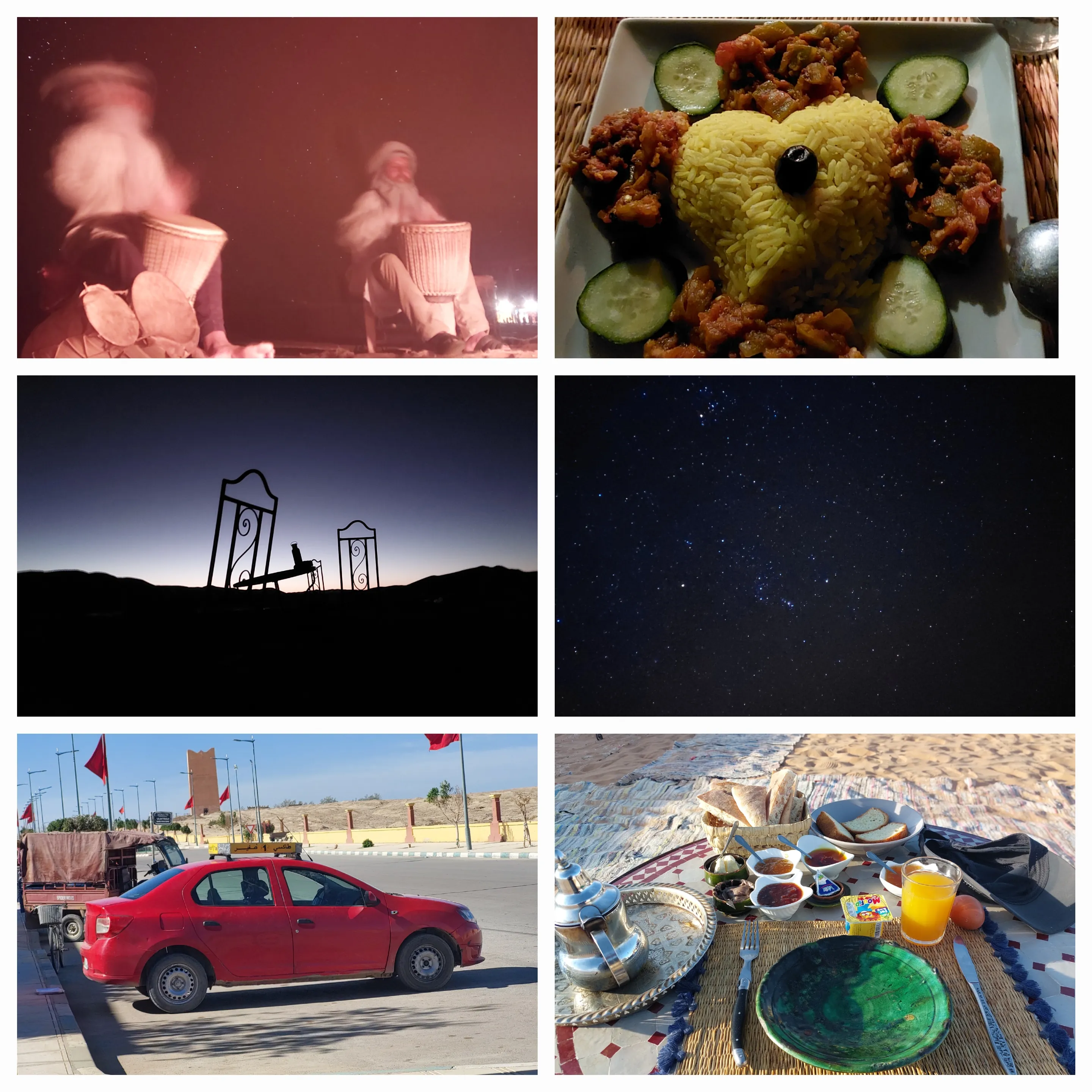
Random shots from the Sahara
Index: Cool facts about the places I visited
- Oujda is one of the last major cities in Morocco that still has a public square for Halqa performances: the Sidi Abdelouahab Square.
- Oujda has the easternmost karting field in Morocco, located just a few meters from Algeria 😅
- Taourirt has one of the many Kasbahs built by Moulay Ismail for his army (others include Kasbah Tadla, Kasbah Essaidia, Kasbah Gnawa in Salé, Kasbah Mehdia in Kenitra, Kasbah Azrou…).
- Debdou once had one of the highest concentrations of Moroccan Jews. Remains of synagogues, Hebrew schools, and courts are still standing to this day.
- Ain Beni Mathar is one of the few cities with Christian, Jewish, and Muslim cemeteries located next to each other.
- The Figuig Province administrative headquarters is not in Figuig but in Bouarfa.
- Figuig is around 1,000 years old, while Bouarfa is less than 100 years old. The latter used to be a mining town before being converted into a garrison city and later a settlement for people from the surrounding areas.
- The Figuig Province is well known for its high-quality lamb meat, among the best in Morocco, especially cattle from the Bni Guil tribes.
- Tendrara has one of the largest oil reserves in Morocco.
- The Bouarfa region is one of the few places where nomads still live in their tents. You can even see them from satellite imagery.
- Figuig has deep underground baths called Bahbouha, which are cool in summer and warm in winter.
- Figuig had seven ksours and one of the few hexagonal stone minarets in Morocco (possibly the only one).
- Errachidia was formerly called Ksar Es Souk and was renamed by King Hassan II after his son, Prince Moulay Rachid.
- Erfoud has one of the largest date markets in Morocco and hosts a date festival each year.
- Rissani has only one taxi in the entire city.
- Rissani is the successor of Sijilmassa, one of the oldest Islamic cities in Morocco, even older than Fez and Marrakech.
- Rissani Souk is considered one of the largest markets in the northeast, continuing the historical trade role of Sijilmassa in the Saharan trade routes.
- Tafilalet has more than 300 ksours, including Moulayite ksours (which hosted Alaouite emirs) like Abbar, and historic Amazigh ksours like Tabouasamt.
- If you’re in Tafilalet, make sure to try Medfouna and Mloukhiya.
- Zagora was once one of the most important Almoravid bases.
- The green clay utensils are a trademark of Tamegroute, near Zagora.
- Tata and its region have one of the highest concentrations of stone carvings in Morocco (and possibly in the world).